

2025 Winter Collection
-

Frederick Usher De Voll, Connecticut Mill Town
Snow blankets the quiet town, softening its edges and unifying rooftops, mills, and hillside beneath a pale winter light. De Voll’s brushwork conveys both precision and atmosphere—each stroke a study in restraint and rhythm.
There’s a quiet poetry in the way he captures the season’s stillness—not as emptiness, but as presence. It’s a scene that invites reflection, where the ordinary becomes quietly luminous.
-
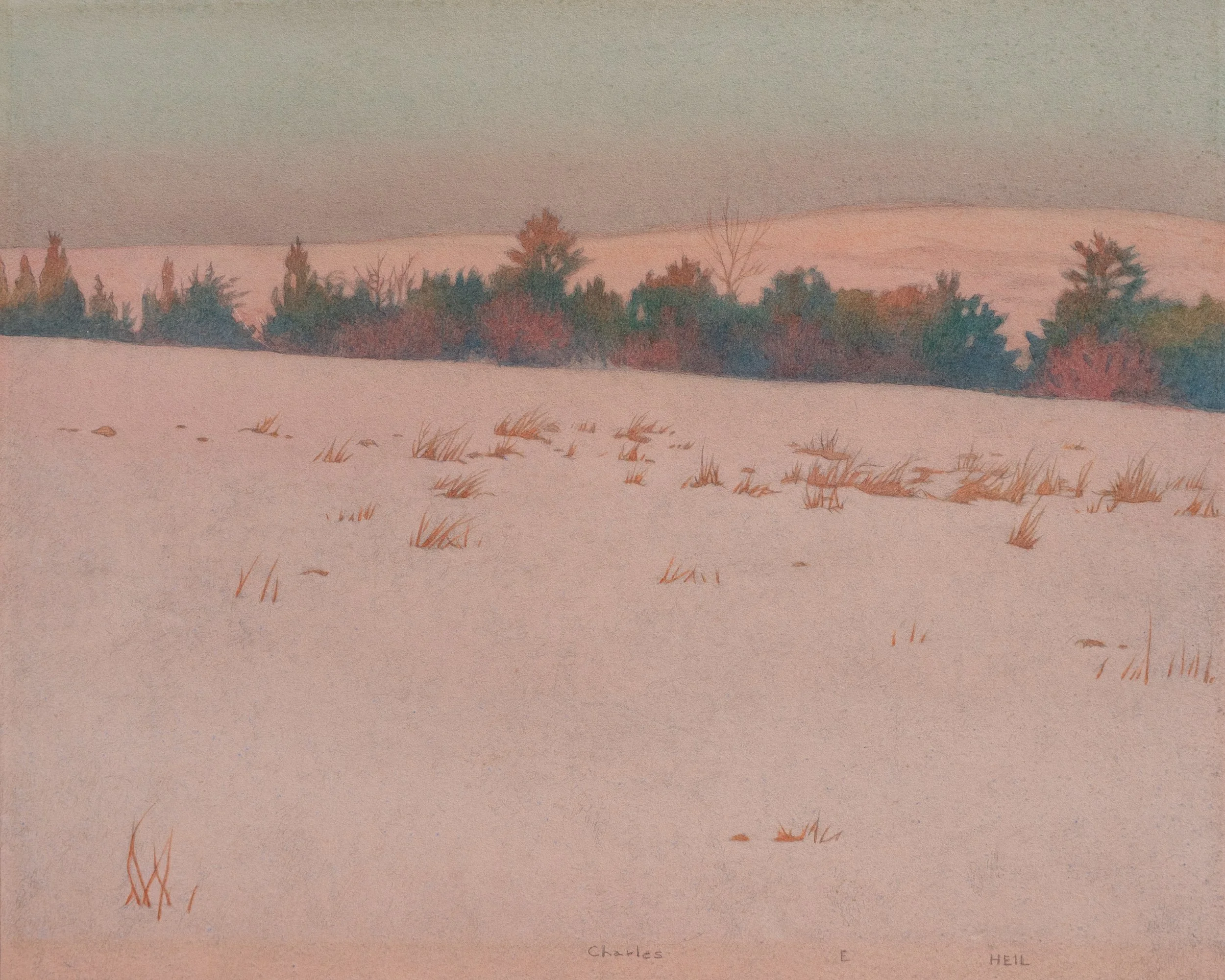
Charles Emile Heil, Snowfield in Quiet Light
Heil captures the stillness of winter with exquisite restraint. Across the open field, soft light drifts over the pale snow, gathering warmth at the horizon where the trees meet the sky.
Each hue is measured, each line deliberate—the quiet discipline of an artist who understood that beauty often lies in what’s left unsaid.
It’s a moment suspended in calm, where color and silence speak with equal grace.
-
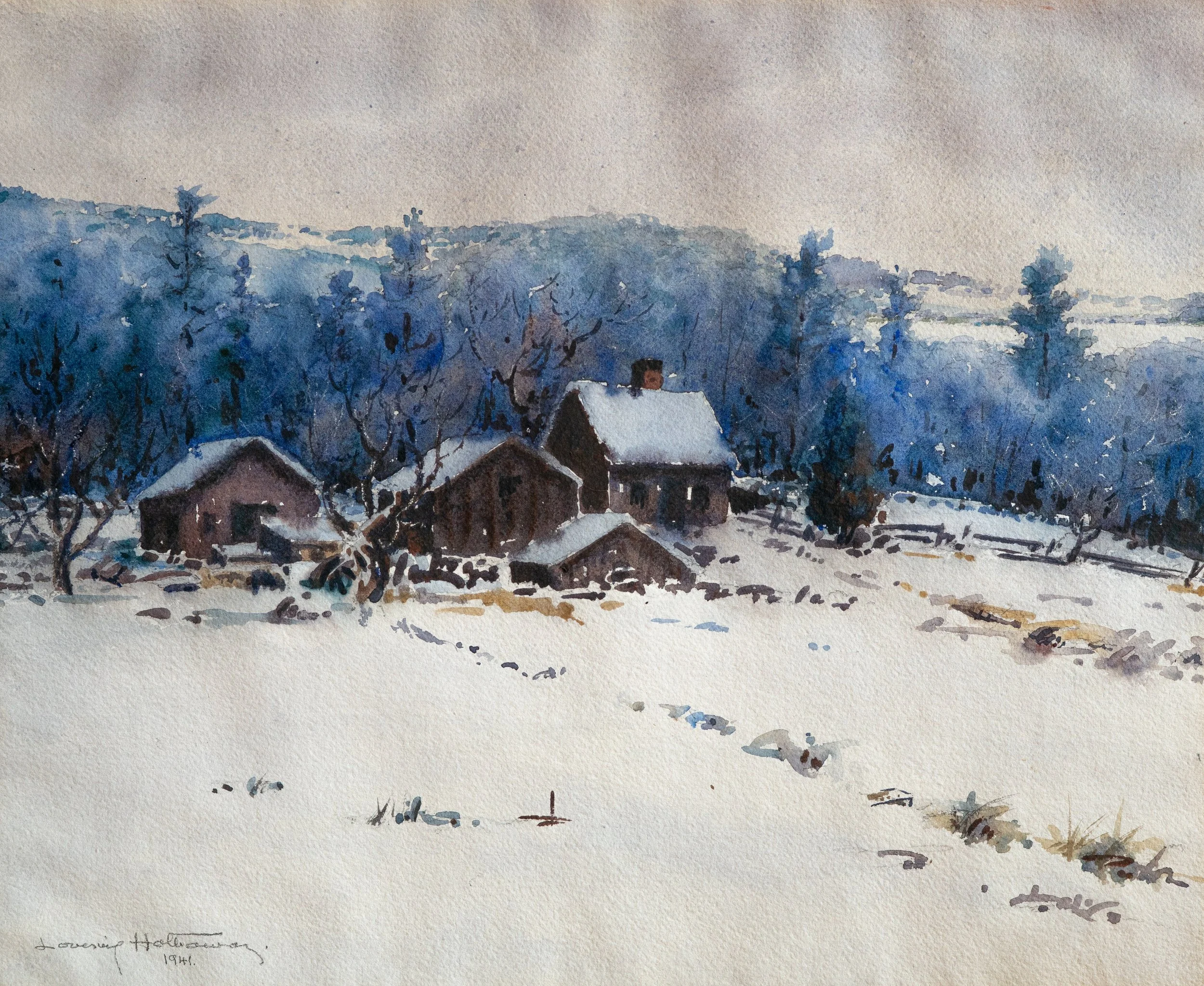
Lovering Hathaway, Winter in Vermont
A quiet hillside farm rests beneath a fresh fall of snow, its rooftops and fields softened into gentle shapes by the morning light. Hathaway paints with a calm precision and a cool palette.
There’s a sense of solitude here, not of isolation but of belonging—the stillness of winter as something lived and understood.
In his hands, the familiar Vermont landscape becomes timeless, a meditation on light, endurance, and the quiet dignity of place.
-
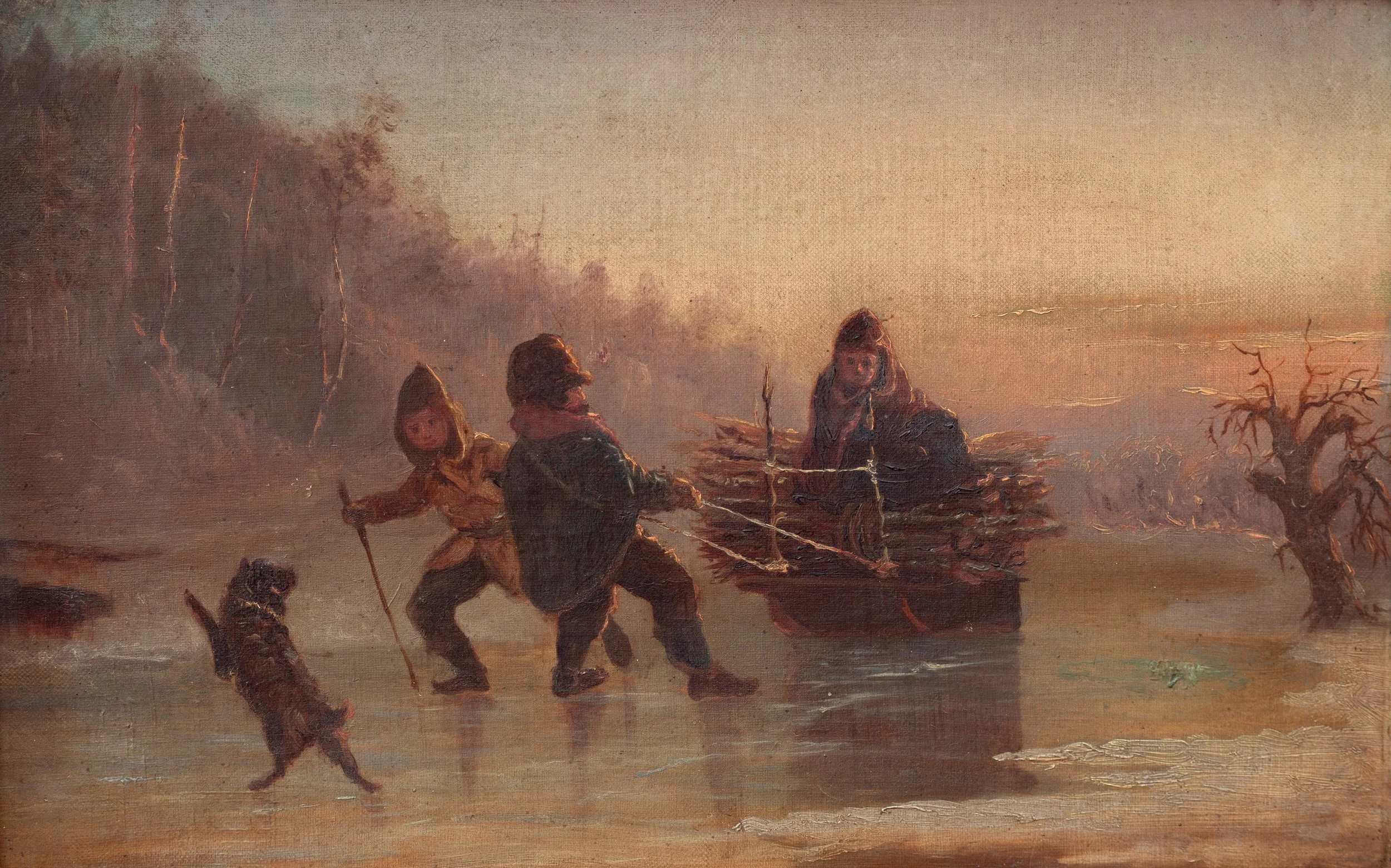
William Raphael, Homeward with Dog and Burden, c. 1860
This early work by William Raphael highlights his engagement with scenes of rural life in a changing landscape. Three children make their way across the frozen ground—one boy pulling a sled piled with kindling and his sister, while another trails behind, distracted by a dog at play.
Raphael captures the quiet realism of everyday life in a northern settlement, where endurance and warmth often went hand in hand. His delicate handling of light—soft against the ice and rising mist—reveals both the chill of the season and the closeness of family.
It’s an image of 19th-century rural life seen without sentimentality—intimate, observant, and grounded in the dignity of simple labor.
-

Frederic Marlett Bell-Smith, Lake in the Rockies
In this quiet study of the Canadian Rockies, Bell-Smith brings us into a realm of high peaks and cool light. The still water reflects the sky, trees rise dark against the pale mountains, and the wide expanse echoes a land both wild and immutable.
Painted around the turn of the 20th century, the work captures the moment when Canada’s western landscape was beginning to be seen not just as wilderness, but as an idea—an emblem of possibility and permanence. His soft yet sure handling of watercolor gives form to air and rock, showing the Rockies not as dramatic spectacle but subtle presence.
For the collector attuned to depth, this is more than a landscape—it’s a testimony to the age of exploration, when the mountain ranges of the West became central to a cultural identity still in formation. To own this piece is to hold a quiet chapter of art history, where technique meets terrain and place meets idea.
-
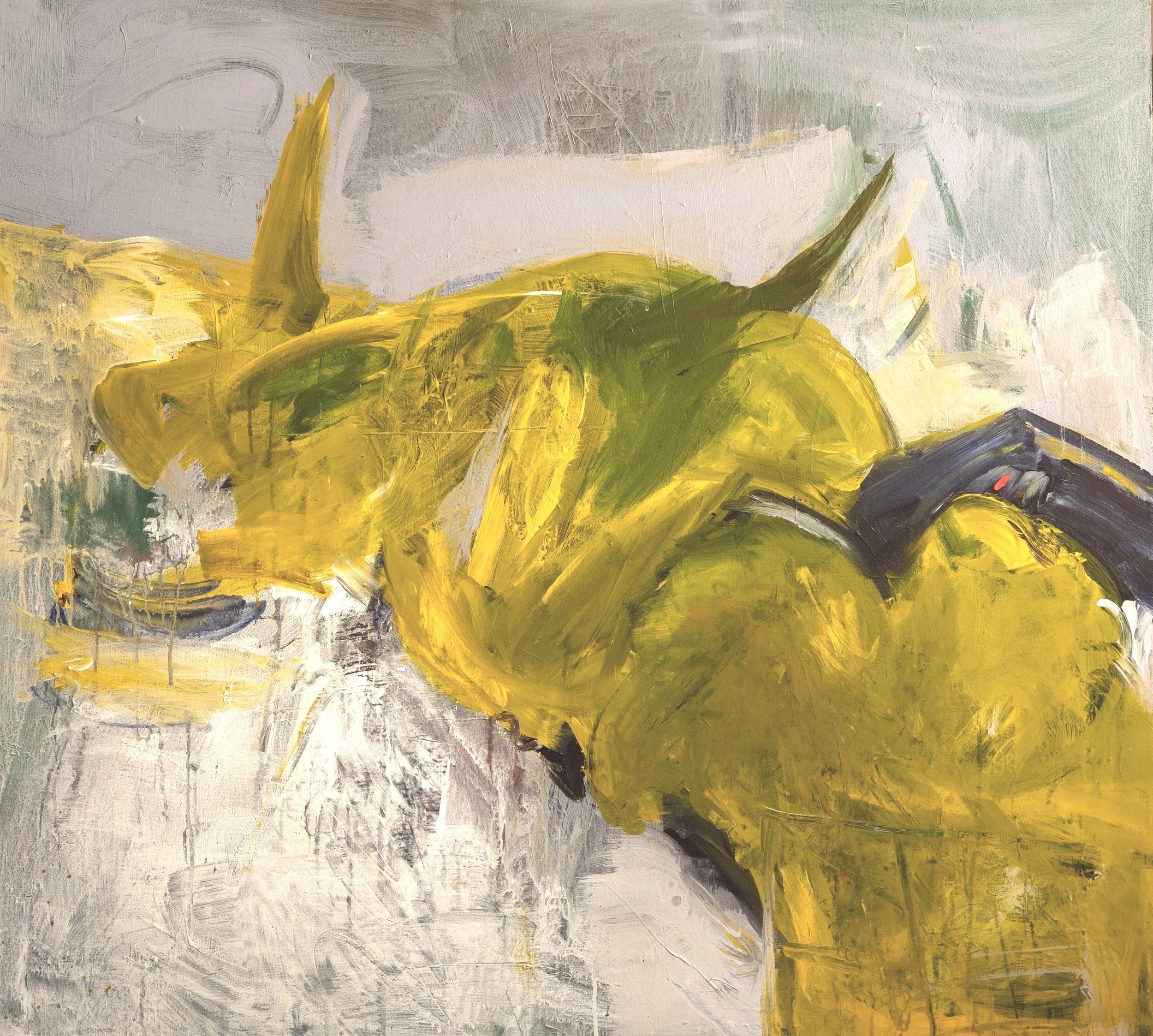
Tim Nichols, Snow Dragon
Nichols channels the energy of abstract expressionism while redirecting it into a landscape of ice and breath. Swirling networks of white-grey, slate, and pale cobalt trace the architecture of frost, while swoops of shimmering pigment suggest a shell of glacial air.
Rather than the wild gesture alone, Nichols frames restraint and accumulation: layered texture, scraped surfaces, the echo of rhythm in the cooling air. It becomes a meditation on presence — the hush of snow, the weight of silence, the tension between movement and stillness.
For the collector attuned to the now of art and the then of place, this work stands at the intersection of abstraction and seasonal presence. It asks us to move beyond representation and into feeling: winter as shape, edge, pulse.